Auto insurance is one of the most important financial protections for drivers, yet many people still find it confusing. Between unfamiliar terms, different types of coverage, and policy limits, understanding how auto insurance works can feel overwhelming at first.
The good news is that auto insurance does not have to be complicated. Once you understand the basics, you can make smarter decisions, choose the right coverage, and avoid costly mistakes in the future.
This guide explains auto insurance in simple and professional terms so you can feel more confident when purchasing or reviewing your policy.
What Is Auto Insurance?
Auto insurance is a contract between you and an insurance company. In exchange for a monthly or yearly payment called a premium, the insurance company helps cover financial losses related to your vehicle.
These losses may include:
- Car accidents
- Vehicle damage
- Theft
- Medical expenses
- Property damage
- Legal costs
Auto insurance protects not only your car but also your financial stability. Without proper coverage, even a small accident could result in significant expenses.
Why Auto Insurance Is Important
Many drivers view insurance as just another monthly expense, but it serves a much bigger purpose.
Here are some of the key benefits of having auto insurance:
Financial Protection
Accidents can happen unexpectedly. Insurance helps reduce out-of-pocket expenses for repairs, injuries, or liability claims.
Legal Requirement
In many countries and states, having at least basic auto insurance is legally required before driving on public roads.
Peace of Mind
Knowing you are protected allows you to drive with greater confidence and less stress.
Protection Against Uninsured Drivers
Some policies also protect you if another driver causes an accident but does not have insurance.
Common Types of Auto Insurance Coverage
Understanding the main types of coverage is essential when selecting a policy.
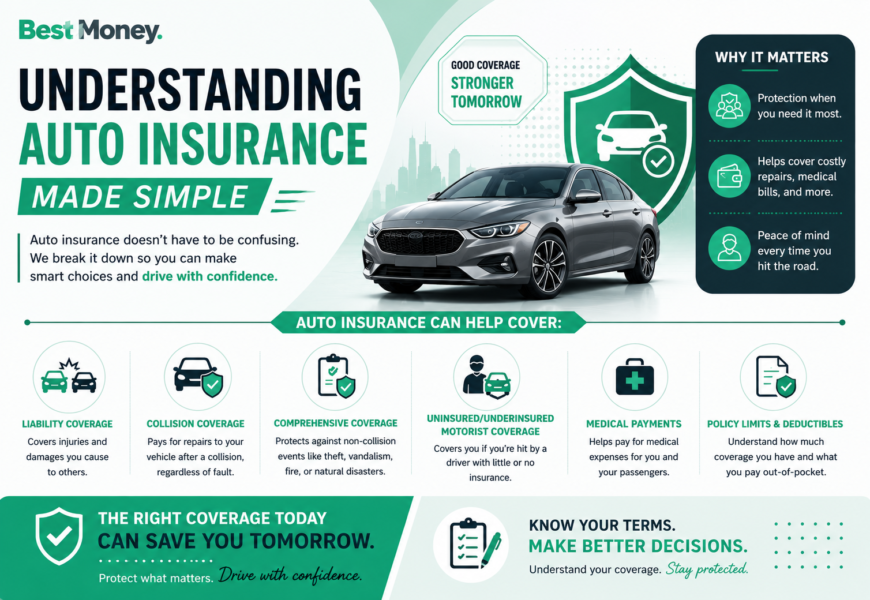
Liability Coverage
Liability insurance helps pay for damage or injuries you cause to other people in an accident.
It usually includes:
- Bodily injury liability
- Property damage liability
This is often the minimum coverage required by law.
Collision Coverage
Collision insurance helps pay for repairs to your own vehicle after an accident, regardless of who was at fault.
Examples include:
- Hitting another car
- Colliding with a pole
- Accidentally damaging your vehicle
Comprehensive Coverage
Comprehensive insurance covers non-collision incidents such as:
- Theft
- Fire
- Floods
- Vandalism
- Natural disasters
This coverage is especially useful for protecting newer vehicles.
Personal Injury Protection (PIP)
PIP helps cover medical expenses for you and your passengers after an accident.
Depending on the policy, it may also cover:
- Lost wages
- Rehabilitation costs
- Emergency medical care
Uninsured or Underinsured Motorist Coverage
This coverage protects you if another driver causes an accident but lacks sufficient insurance coverage.
Understanding Key Insurance Terms
Insurance policies often contain technical language. Here are some important terms explained simply.
Premium
The amount you pay for your insurance policy monthly, quarterly, or yearly.
Deductible
The amount you pay yourself before the insurance company covers the remaining costs.
For example, if repairs cost $2,000 and your deductible is $500, the insurance company pays $1,500.
Policy Limit
The maximum amount the insurance company will pay for a covered claim.
Claim
A request made to the insurance company for payment after an accident or loss.
Factors That Affect Your Insurance Rates
Insurance companies calculate premiums based on risk. Several factors influence how much you pay.
Driving Record
Drivers with clean records usually receive lower premiums.
Age and Experience
Younger or less experienced drivers often pay higher rates because they are considered higher risk.
Vehicle Type
Luxury cars, sports cars, and expensive vehicles typically cost more to insure.
Location
Areas with higher accident rates or vehicle theft may result in higher insurance costs.
Coverage Level
More coverage generally means higher premiums.
Tips for Choosing the Right Auto Insurance
Choosing the right policy requires more than simply selecting the cheapest option.
Compare Multiple Quotes
Different companies offer different pricing and benefits. Comparing quotes helps you find better value.
Understand Your Needs
A newer vehicle may benefit from comprehensive coverage, while an older car may only require basic protection.
Review Deductibles Carefully
Higher deductibles can reduce premiums but may increase your expenses after an accident.
Check Customer Support and Claim Services
A low-cost policy may not always provide the best customer experience during emergencies.
Ask About Discounts
Many insurers offer discounts for:
- Safe driving
- Multiple vehicles
- Good students
- Bundled policies
- Anti-theft devices
Common Mistakes Drivers Should Avoid
Choosing Coverage Based Only on Price
Cheaper insurance may provide limited protection when you actually need help.
Ignoring Policy Details
Always read the terms carefully to understand exclusions and limitations.
Letting Coverage Expire
Driving without insurance can lead to legal penalties and financial risk.
Not Updating Your Policy
Major life changes like moving, buying a new car, or adding a driver should be reported to your insurer.
Final Thoughts
Auto insurance may seem complicated at first, but understanding the basics makes the process much easier. The right policy protects your finances, your vehicle, and your peace of mind.
Instead of focusing only on cost, drivers should look for balanced coverage, reliable customer support, and protection that matches their specific needs.
Taking the time to understand your insurance today can help you avoid major financial problems tomorrow.
Disclaimer: Advertisement. BestMoney.com is not an insurance provider. Terms set by providers. Not all providers featured.