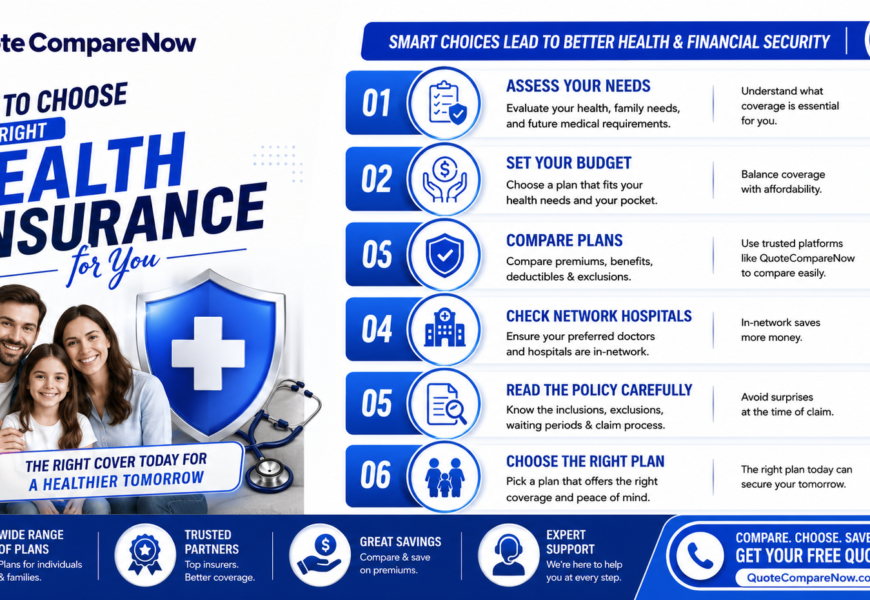
Choosing the right health insurance plan is one of the most important decisions you can make for yourself and your family. The right coverage not only protects your health but also helps reduce financial stress during medical emergencies. With so many insurance options available today, understanding how to select the best plan can help you make a smarter and more confident decision.
A good health insurance policy provides access to quality healthcare, financial security, and peace of mind for the future. Below are the most important factors to consider when choosing the right health insurance plan for your needs.
1. Assess Your Healthcare Needs
Before selecting a health insurance plan, it is important to evaluate your personal and family healthcare needs.
Consider factors such as:
- Current medical conditions
- Family medical history
- Future healthcare requirements
- Prescription medications
- Frequency of doctor visits
Understanding your needs will help you choose coverage that provides the right level of protection without paying for unnecessary benefits.
2. Set Your Budget
Health insurance should provide both protection and affordability. Determine how much you can comfortably spend on:
- Monthly premiums
- Deductibles
- Co-payments
- Out-of-pocket expenses
Choosing the cheapest plan is not always the best option. A balanced plan with proper coverage can save you more money in the long run during emergencies or major medical treatments.
3. Compare Insurance Plans
Comparing multiple insurance plans is essential before making a final decision. Carefully review:
- Coverage benefits
- Premium costs
- Deductibles
- Exclusions
- Claim processes
- Waiting periods
Using trusted insurance comparison platforms can help simplify the process and allow you to find the best value for your budget and healthcare needs.
4. Check Network Hospitals and Doctors
Always verify whether your preferred hospitals, clinics, and doctors are included in the insurance provider’s network.
In-network healthcare providers usually offer:
- Lower treatment costs
- Cashless hospitalization
- Faster claim approvals
- Better convenience
A strong hospital network ensures easier access to quality medical care whenever needed.
5. Read the Policy Carefully
Many people overlook policy details before purchasing insurance. It is important to carefully read the terms and conditions to understand:
- What is covered
- What is excluded
- Claim procedures
- Waiting periods
- Emergency coverage limits
Understanding these details helps avoid unexpected surprises during medical claims.
6. Choose a Plan That Fits Your Future
Health insurance is a long-term investment in your well-being. Choose a plan that not only meets your current needs but also supports your future healthcare goals.
A reliable health insurance policy should provide:
- Financial protection
- Emergency medical support
- Family coverage options
- Preventive healthcare benefits
- Peace of mind
Selecting the right plan today can help secure a healthier and more stable future for you and your loved ones.
Benefits of Choosing the Right Health Insurance
The right health insurance plan offers several important advantages, including:
- Better financial security
- Access to quality healthcare
- Reduced medical expenses
- Emergency protection
- Stress-free medical treatment
- Long-term health support
Good insurance coverage allows individuals and families to focus on health and recovery instead of worrying about medical bills.
Conclusion
Choosing the right health insurance plan requires careful planning, comparison, and understanding of your healthcare needs. By assessing your budget, comparing plans, checking hospital networks, and reviewing policy details, you can find a plan that provides the right balance of affordability and protection.
Health insurance is not just about covering medical costs — it is about protecting your future, supporting your family, and ensuring peace of mind during uncertain times.